
Most people treat the day after a hard session as a decision with two options. Do nothing, or do something light. Stay on the sofa, or go for a walk. Both positions get defended online with more confidence than evidence, and the argument has been running long enough that it now feels like a genuine choice between two opposing philosophies.
The rest day side says your body repairs when you leave it alone, and that filling every gap with movement is training you refuse to call training. The active recovery side says gentle movement moves blood, loosens stiff tissue, and gets you back to feeling normal faster than sitting still does. Both descriptions are broadly accurate. Neither is a complete answer, because both are answering a narrower question than the one you actually have.
The case for the full rest day
A complete rest day is the simplest recovery tool there is, and simplicity counts for more than it usually gets credit for. Adaptation does not happen during a workout. It happens in the hours and days afterwards, while your body repairs tissue, restores fuel, and lets an elevated nervous system settle back down. A day with no training demand on it gives that process an uninterrupted run at the problem. It is also the honest answer when you are past tired and into flat. There is a difference between the pleasant heaviness that follows a good session and the dull, unmotivated feeling that shows up after several weeks of pushing with no proper break. The second one does not respond to a gentle walk. It responds to a day where nothing is being asked of you, and to a night where you go to bed early because there is no session to fit in first.
There is a practical case too. Most people underestimate the total load they are carrying, because training is only part of it. Work stress, short sleep, a long commute, small children and an unfamiliar routine all draw on the same recovery budget. A full rest day is the one lever that lowers all of them at once. Wellbody's recovery plan reflects this by treating sleep as the anchor, at 7 to 9 hours a night, and by closing its first week with a rest and recharge day rather than one more session.

The case for active recovery
Active recovery means low intensity movement done deliberately on a non-training day: a walk, gentle yoga, easy swimming, a slow cycle. The mechanism is not mysterious. Easy movement raises circulation without adding meaningful training stress, keeps joints moving through their available range, and takes the edge off the stiffness that otherwise makes your next session feel worse than it should. The intensity ceiling is the whole design. If you finish breathing hard, or you needed to change clothes, it has stopped being recovery.
It also solves a behavioral problem that pure rest does not. A routine with four training days and three blank days has holes in it, and holes are where habits leak out. A twenty minute walk on an off day keeps the thread intact without costing you anything. This is why the second phase of Wellbody's recovery plan, which runs 8 to 12 weeks, is built around experimenting with active recovery on rest days alongside mobility work and tracking how recovered you actually feel from week to week.
Where the debate falls apart
The argument collapses as soon as you look at how a recovery week is actually structured, because a good one contains both, on purpose, on different days. The first week of Wellbody's recovery plan has a day themed around embracing active recovery, with a thirty minute easy session on it, and a separate day themed around rest and recharge built around sleep and low effort self care. They are not competing options. They are two different jobs in the same seven days. The weekly focus for that first week is to begin active recovery techniques while tightening up hydration and food, which only makes sense if the rest day is already in the calendar holding the other end.
Wellbody builds the system for you.
3 daily actions across fitness, nutrition, mobility, recovery, and mindfulness.


Rest days and active recovery are not rival philosophies. They are different tools for different weeks, and the useful skill is knowing which one the week in front of you needs.
The failure mode that actually matters
Once you see rest and active recovery as two jobs rather than two camps, the real failure mode becomes obvious, and it is not picking the wrong one. It is having no plan at all, so recovery becomes whatever happens by default. For one person the default is seven days of sitting still, called rest. For another it is a gentle session that quietly grows into a fifth training day. Both are the same mistake wearing different clothes.
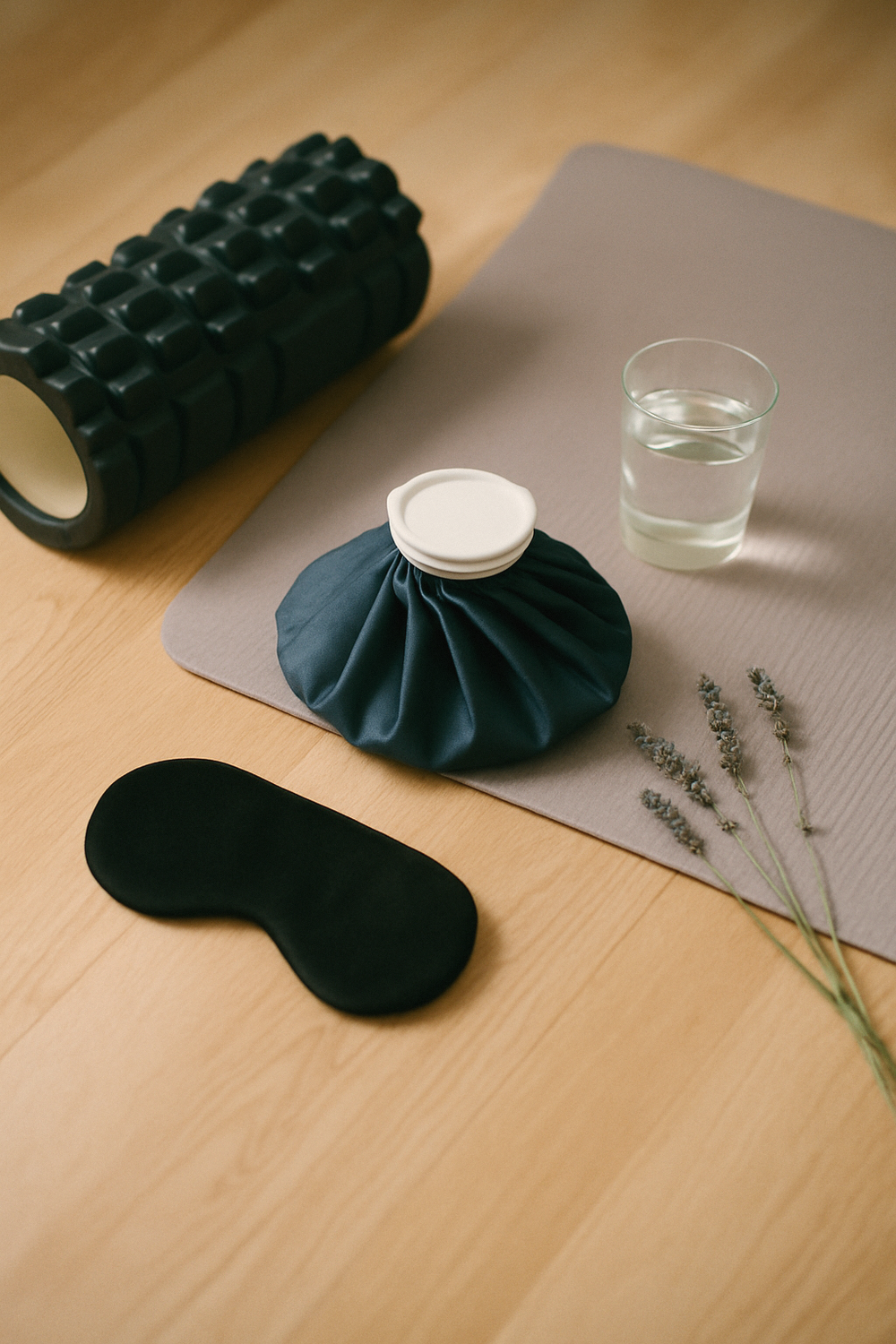
This is why the first phase of the recovery plan, which runs 4 to 8 weeks, does not start with either option. It starts with assessment: a short journal of your activity, your sleep and how recovered you feel, followed by basic practices like stretching, foam rolling and brief mindfulness work. You cannot tell whether a rest day helped if you were not paying attention to how you felt before it.
How to choose on any given day
In practice the choice is easier than the debate suggests. If you are stiff and flat but not exhausted, and yesterday's session was hard rather than punishing, easy movement will usually leave you feeling better than stillness does. If your sleep has been short, your resting energy is genuinely low, or life outside training is unusually heavy, take the full day and protect the sleep. Then write down what happened. By the third phase, which spans 3 to 6 months, you are building a personal recovery plan with scheduled rest days and recovery focused sessions in it, and that plan is only as good as the observations you collected while you were still guessing.
About Wellbody
Wellbody is a body health app that replaces the stack. Pick one goal and it builds three daily actions across fitness, nutrition, mobility, recovery and mindfulness, then adjusts them around what you actually did. Connected behind the scenes so you don't have to manage the pieces, and it grows with you: month six looks nothing like month one. No dashboards, no re-planning. You just keep showing up.