
Soreness that lingers for three days, sessions that feel harder than they should, sleep that does not seem to fix anything: most of what people call slow recovery is not a mysterious physiological problem. It is sleep debt, not enough food or fluid, and doing nothing at all on the days between sessions. The fixes are unglamorous and they work, which is inconvenient for anyone hoping the answer is a device.
Recovery is also the part of body health that responds fastest to attention, because most people have never given it any. The first four to eight weeks of taking it seriously are mostly about seeing your own habits clearly and putting a few basic practices in place. What follows is the order that tends to produce the biggest change for the least effort.
Start by finding out what your recovery actually looks like
Before changing anything, spend a week or two writing down what you already do: when you get into bed and when you actually fall asleep, how much you drink, what you eat after training, what you do on the days between sessions, and how you feel each morning. This sounds like busywork. It is the step that stops you from solving the wrong problem. Plenty of people buy a massage gun when the real issue is six hours of sleep on weeknights. A rough written record over two weeks will usually point straight at the one or two things worth fixing first.
Sleep is the single biggest lever you have
Seven to nine hours a night does more for recovery than every other item on this list combined. Sleep is when tissue repair and hormonal regulation actually happen, and no technique compensates for missing it. If you are consistently under seven hours, that is the project, not contrast showers and not foam rolling. The improvements available here are boring: a consistent bedtime, a dark and cool room, less screen light in the last hour, and caffeine cut off earlier in the day than feels necessary. Tracking your sleep quality alongside how recovered you feel the next morning is the quickest way to prove the connection to yourself, which is usually what it takes to protect the habit.
Hydration and food do more than most recovery products
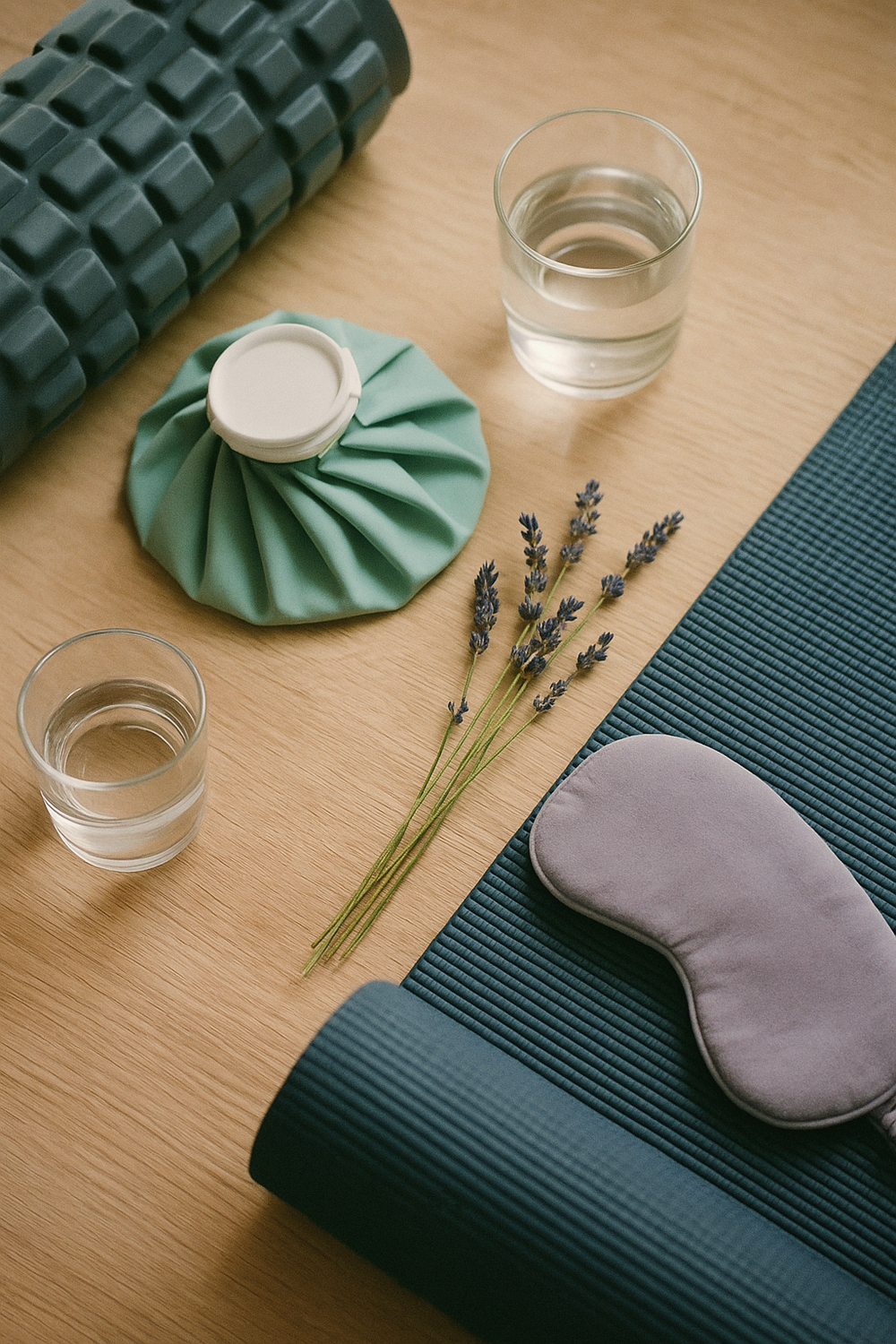
Being even mildly dehydrated makes everything feel worse: heavier legs, poorer focus, soreness that hangs around longer. Most people arrive at a session already behind and then underestimate what they lose during it. Drinking steadily across the day rather than reacting to thirst is the whole intervention, and thirst is a late signal. By the time you notice it, you are already down.
Food matters in two ways. The overall pattern needs to be nutrient-dense enough to supply what repair requires, which mostly means enough protein and enough actual vegetables and fruit rather than any particular supplement. And timing matters around training: getting protein and carbohydrate in reasonably soon after a hard session gives your body materials while it is most receptive to them. Neither of these needs a spreadsheet, but both benefit from a few weeks of noticing what you ate after training and how you felt the following day.
Almost nobody who sleeps six hours and skips meals is being held back by the lack of an ice bath. The basics are not a warm-up for real recovery work. They are the work.
Wellbody builds the system for you.
3 daily actions across fitness, nutrition, mobility, recovery, and mindfulness.


Move gently instead of doing nothing
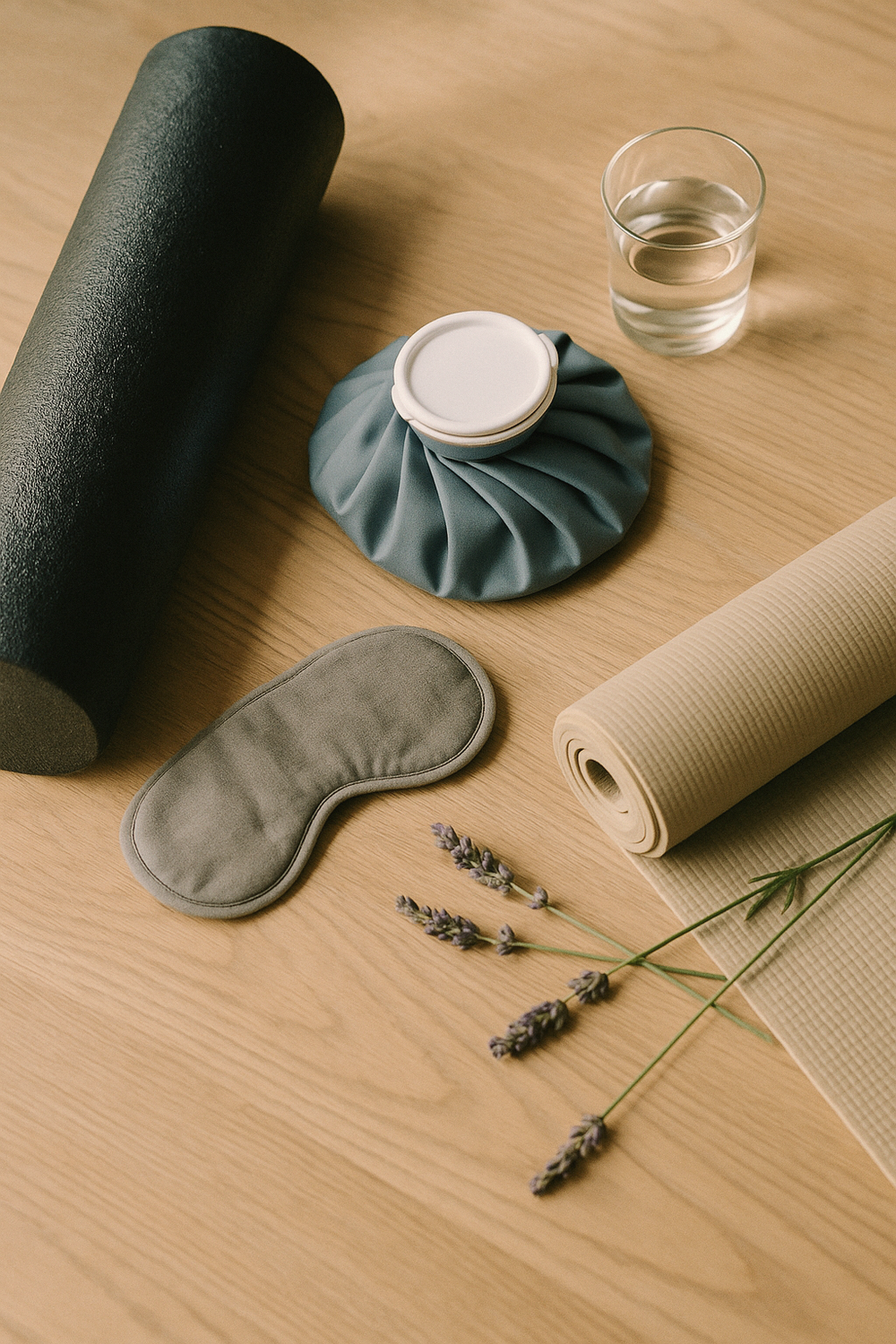
The instinct after a hard session is to sit still. Low-intensity movement on the day or two afterwards works better: a walk, a slow bike ride, easy swimming, gentle yoga. It increases blood flow to tissue that needs it without adding meaningful fatigue, and it tends to reduce stiffness rather than letting it settle in. Alongside that, targeted mobility work for whatever is tight, plus stretching or foam rolling after sessions, keeps small restrictions from becoming the reason you cannot train. Thirty minutes of easy movement is usually plenty. The point is circulation and range of motion, not another workout.
Treat stress as a recovery variable
Your body does not keep separate accounts for training stress and everything else. A week of deadline pressure, broken sleep and low mood will show up in your sessions as reliably as an extra day of hard training would. That is why stress management belongs inside a recovery plan rather than beside it. Breathing exercises, short meditation, mindfulness practice, or simply a protected half hour that is not spent looking at a screen all reduce the total load you are carrying. It feels indirect. It is not: people who add a stress practice frequently report better recovery without changing anything about their training.
How to tell whether it is working, and what to try later
Track two or three simple things and give it a month: how you feel in the morning, how quickly soreness fades after a hard session, and whether your performance is holding steady or improving. Better energy and shorter-lived soreness usually show up within the first four to eight weeks. Real gains in resilience, meaning you can handle more training without falling apart, tend to arrive across the following two to three months as the habits accumulate. Only after that is it worth experimenting with the more elaborate options: alternating hot and cold, massage, or anything else that needs equipment or money. Those can help at the margins. They cannot replace what comes before them, and reaching for them first is the most common way people spend a lot of effort on recovery and feel no better.
About Wellbody
Wellbody is a body health app that replaces the stack. Pick one goal and it builds three daily actions across fitness, nutrition, mobility, recovery and mindfulness, then adjusts them around what you actually did. Connected behind the scenes so you don't have to manage the pieces, and it grows with you: month six looks nothing like month one. No dashboards, no re-planning. You just keep showing up.