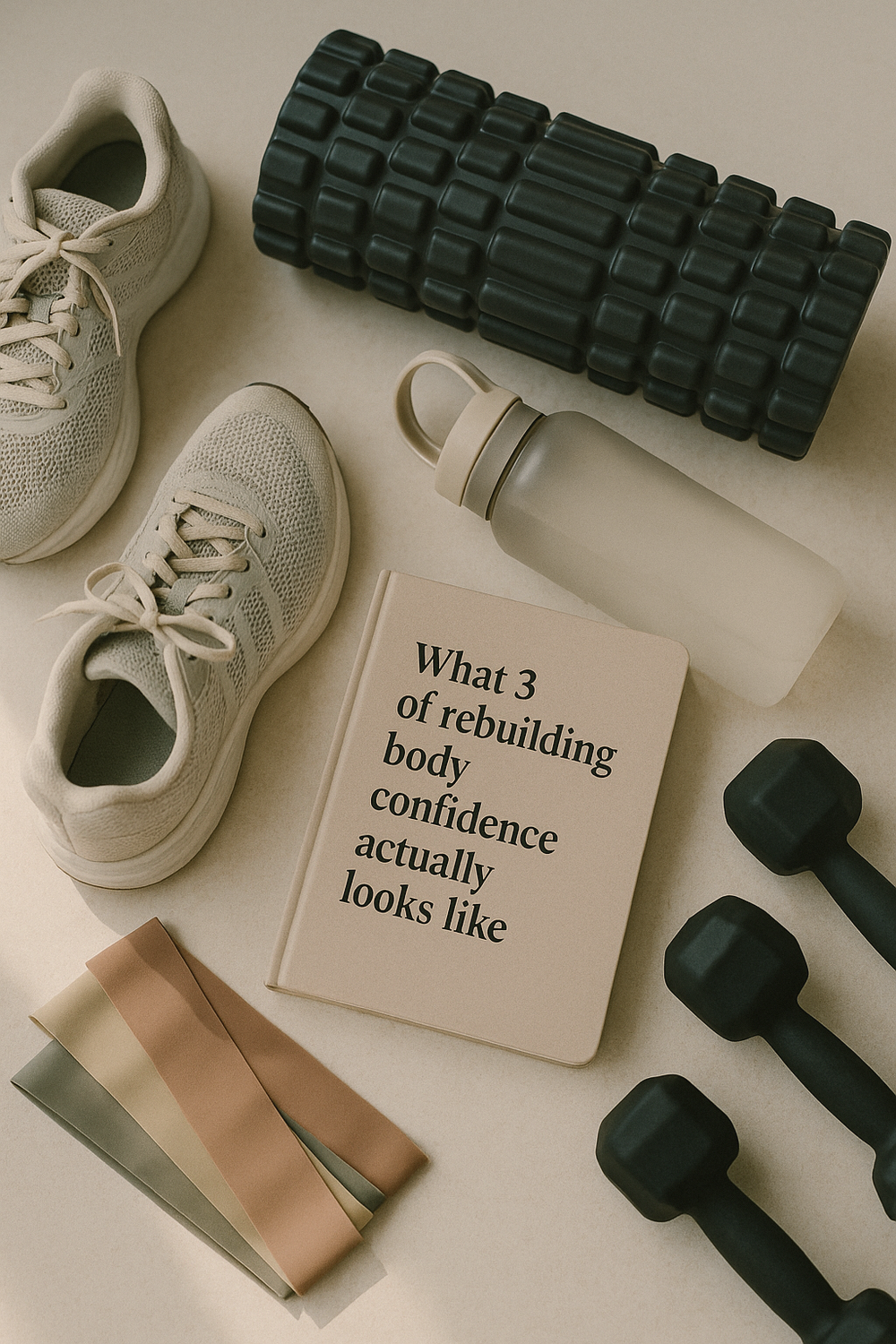
Most approaches to body confidence skip the beginning. They assume the problem is physical - not enough fitness, not the right nutrition, not the right look - and start there. The reason that approach tends to fail is that body confidence is not a downstream result of physical change. It is something that has to be built independently, in parallel, through a different kind of work.
A structured path toward feeling comfortable in your body runs through distinct phases, each with its own focus and purpose. The first three months cover the two foundational phases. Here is what that actually looks like, week by week and phase by phase.
Phase 1: Awareness and acceptance (weeks 1 through 8)
The first phase is called Awareness and Acceptance and it runs 4 to 8 weeks. The work here is almost entirely internal. The core actions include maintaining a daily journal focused on thoughts and feelings about your body, building a list of personal strengths that have nothing to do with appearance, practicing daily affirmations, and engaging in mindfulness meditation oriented toward body appreciation rather than body change. There is no fitness requirement and no nutritional target at this stage. The only goal is awareness.
This phase tends to be uncomfortable in a quiet way. Most people carry a steady background of negative self-commentary about their bodies that they have never looked at directly. The journaling in Phase 1 makes that commentary visible. Once it is visible, it can be worked with - you can notice it, name it, and begin to question it. Until it is visible, it runs as an unchecked filter on every experience of physical activity, food, and rest, shaping how you interpret each without you realising it is happening.
Progress in Phase 1 does not look like transformation. It looks like noticing. You begin to catch the negative commentary mid-sentence rather than accepting it as fact. The affirmations start feeling less forced and more like a genuine counterweight to something real. If you finish Phase 1 with a clear picture of what your specific self-critical patterns are and when they tend to appear, you have done the work correctly - even if nothing looks different on the outside.

Phase 2: Building healthy habits (weeks 8 through 20)
Phase 2 is Building Healthy Habits and it covers roughly 8 to 12 weeks. This is where physical habits enter the picture - but the framing matters enormously. The goal is not to change your body in order to feel more confident about it. The goal is to care for your body in ways that feel good, and let that experience of care gradually shift your relationship with it. That distinction sounds small but changes everything about how you approach food and movement.
The key actions in Phase 2 include establishing a balanced eating plan with a variety of nutrient-rich foods, finding a physical activity you actually enjoy and incorporating it weekly, and tracking small achievable fitness goals to build a sense of momentum. There is also a body gratitude practice - writing down three things you appreciate about your body each week. Not three things you want to change. Three things you appreciate.
Wellbody builds the system for you.
3 daily actions across fitness, nutrition, mobility, recovery, and mindfulness.


Phase 2 is where people commonly try to accelerate by adding too much at once. A new eating plan, a new exercise routine, a new mindset practice all at the same time. The research on habit formation is clear: stacking too many changes simultaneously lowers the completion rate of each one. The Wellbody structure introduces these layers sequentially so that each one becomes stable before the next is added.
By the end of Phase 2 - roughly 20 weeks into the process - the experience of body health has shifted. Not because the body has dramatically changed, but because the relationship to it has. Movement is happening because it feels good, not as penance. Eating decisions are being made with more care and less guilt. The negative commentary noticed in Phase 1 is being met with something other than acceptance.
What three months builds - and what comes next
Three months into this goal, most people are somewhere in the middle of Phase 2. The most immediate change is internal - a measurable shift in how frequently and harshly they find themselves judging their bodies compared to where they started. The negative self-talk is still present, but it is less automatic. The physical habits are present but still relatively new. The eating plan is established and mostly consistent. The physical activity is happening weekly but has not yet become the kind of deeply embedded routine that feels effortless.
What three months does not produce is a fixed outcome. There is no weight target or appearance benchmark being tracked here. The markers that indicate real progress are more qualitative: you are moving because you want to, not because you feel obligated. You are eating in a way that feels nourishing rather than restrictive. You are aware of negative self-talk and have tools to respond to it. That is what three months of this work actually looks like - not a finished product, but a foundation that is genuinely in place.
About Wellbody
Wellbody is a body health app that replaces the stack. Pick one goal and it builds three daily actions across fitness, nutrition, mobility, recovery and mindfulness, then adjusts them around what you actually did. Connected behind the scenes so you don't have to manage the pieces, and it grows with you: month six looks nothing like month one. No dashboards, no re-planning. You just keep showing up.