Knowing what to eat around exercise is the easy part. The harder part is doing it consistently when you're tired, rushed, or just not thinking about it. That's where a habit stack comes in - a sequence of small, linked behaviours that run almost on autopilot once they're established.
The stack below is built around one anchor habit and four layers that follow from it naturally. Each layer adds something specific to your nutrition around exercise - before, during, after, and over time. It isn't about perfection; it's about reducing the number of decisions you have to make in the moment.
The anchor: map your meals for the week
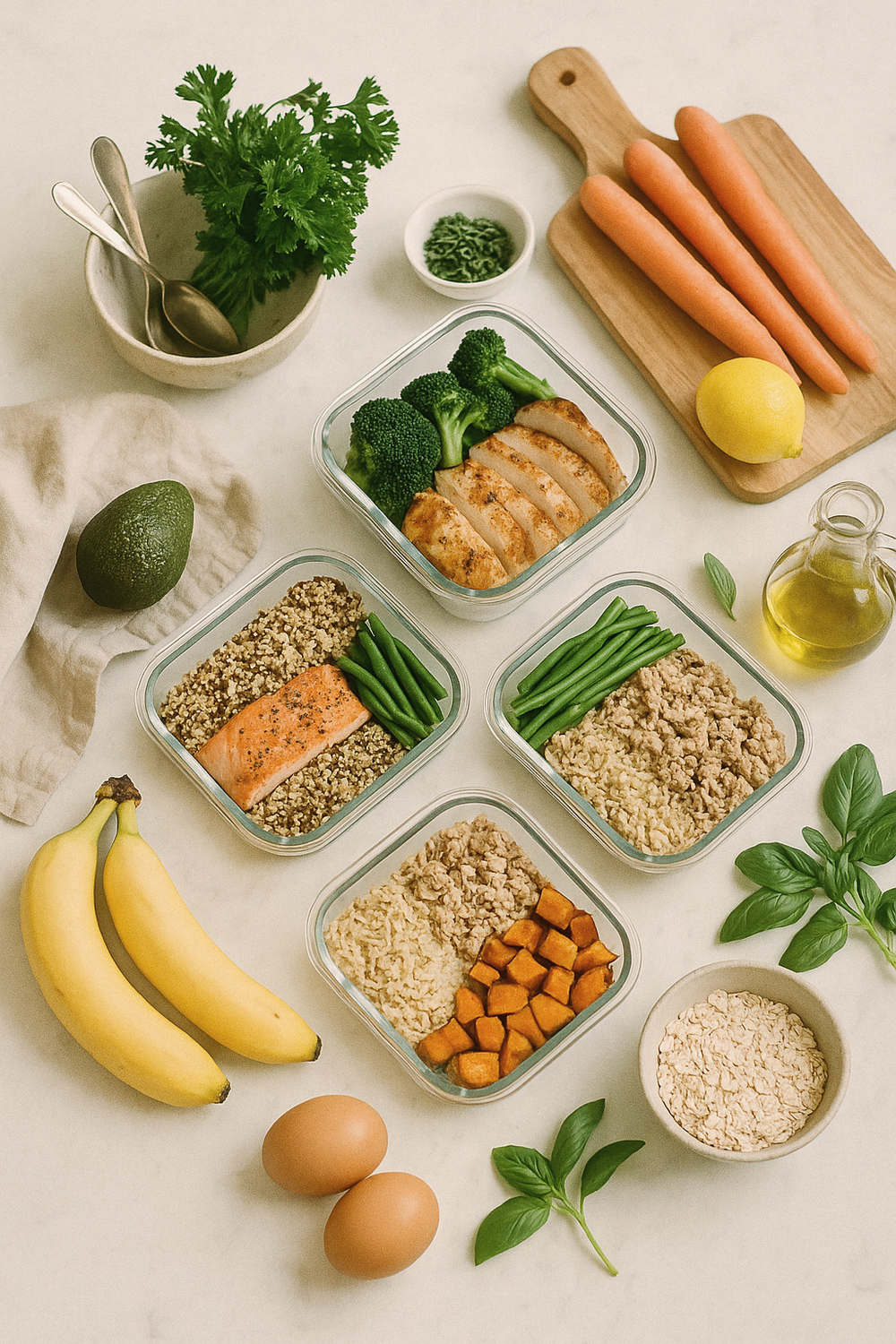
Every habit stack needs a root - one behaviour that makes the rest possible. For exercise nutrition, that anchor is a weekly meal mapping session. It doesn't have to be long. Ten to fifteen minutes, once a week, to look at what you have, what you plan to do for exercise, and what you'll eat before and after each session.
This matters because most fueling problems are not in-the-moment problems - they're planning failures. The person who skips pre-workout food usually didn't decide to skip it; they just didn't have anything ready. The weekly map creates a moment where you make those decisions once, when you have time and headspace, instead of improvising every day under pressure.

Layer 1: the pre-workout trigger
Once the weekly map exists, you can attach a small pre-workout eating habit to a consistent trigger - ideally something you already do. If you change into exercise clothes as a fixed cue before a session, that moment becomes the trigger to eat a small amount of food. The habit doesn't require a decision: the clothes go on, the snack happens.
The content of that snack is something worth experimenting with - different combinations of carbohydrates and small amounts of protein will feel better or worse depending on the type of session and how long before exercise you're eating. The key is that the trigger makes the habit automatic. Once you've eaten before exercise enough times, skipping it will feel noticeably different, which is its own reinforcement.
Layer 2: hydration as a checkpoint, not a task
Hydration is easy to neglect because it doesn't have a natural trigger the way meals do. The fix is to attach it to something that already happens at regular intervals - making coffee in the morning, sitting down at your desk, arriving home from work. Each of these moments becomes a hydration checkpoint: you drink before moving on.
This layer connects directly to the pre-workout trigger. If you've been drinking water consistently throughout the day, you arrive at your session already well-hydrated instead of trying to catch up. The stack layers are not arbitrary - each one builds the conditions that make the next one work better.
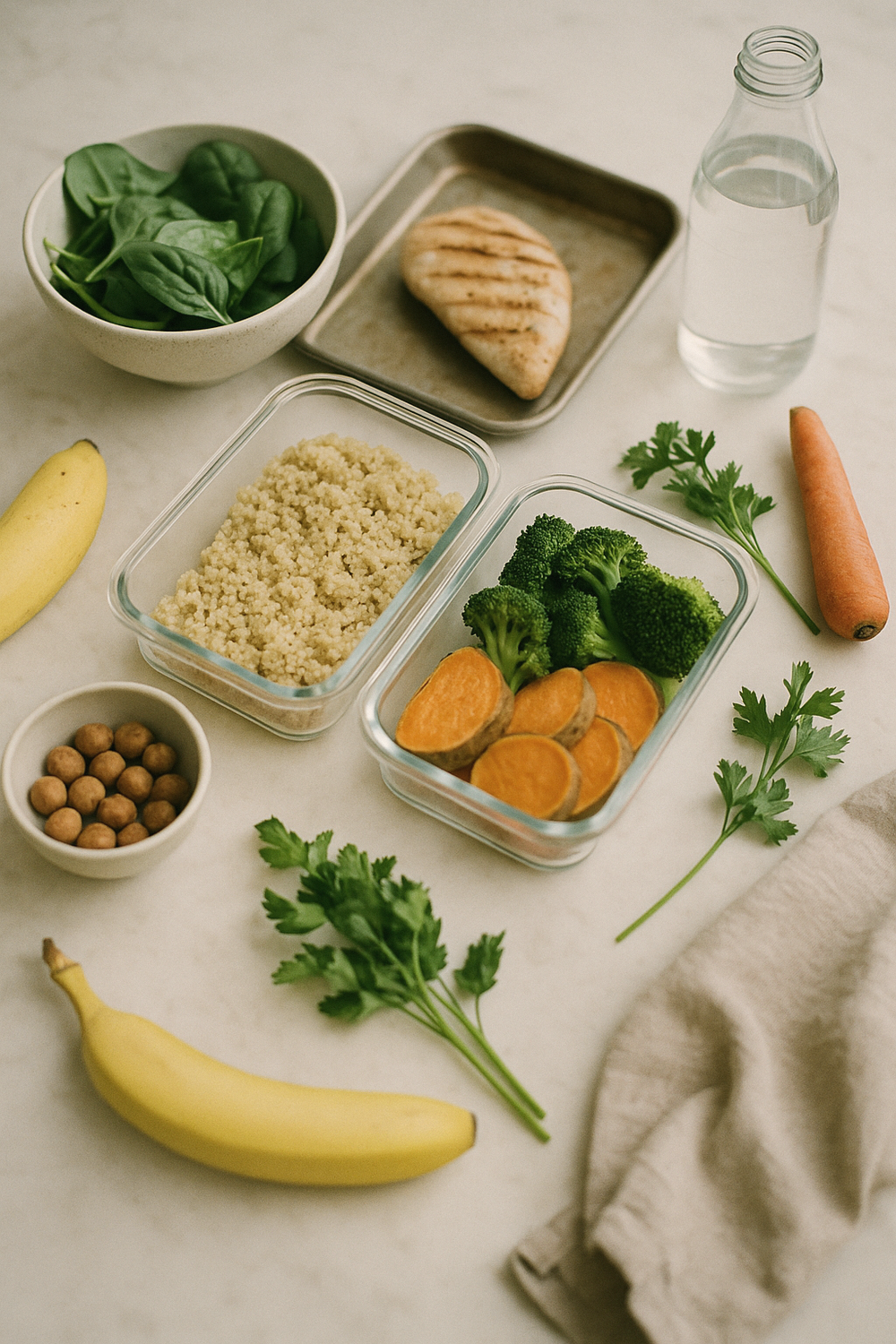
The pre-workout snack habit only works consistently if the hydration habit is running in the background. Under-hydration blunts the benefit of good food timing - the layers depend on each other.
Wellbody builds the system for you.
3 daily actions across fitness, nutrition, mobility, recovery, and mindfulness.


Layer 3: the post-workout window
Recovery nutrition is where most people have the biggest gap. After exercise, the usual tendency is to feel relieved the session is done and move on to whatever's next - often without eating anything for an hour or more. The body's ability to use protein and carbohydrates for recovery is higher in the period immediately following exercise, so delaying that intake has a real cost.
The habit here is to prepare post-workout food before the session, not after. This is where the weekly meal map matters again: when you've already decided what you're eating after Tuesday's session and it's ready in the fridge, you eat it. When you haven't, you don't. A recovery meal doesn't need to be elaborate - it needs to include protein and carbohydrates and be ready when you finish.
Layer 4: the weekly review and adjustment
The fourth layer closes the loop. At the end of each week, a short review - five to ten minutes - connects what you ate to how your sessions felt and how recovery went. This is the feedback mechanism that turns the stack into a learning system rather than a static routine. You notice that Thursday's session was flat and trace it back to what you ate beforehand, or that your energy was higher on days when you'd slept well and eaten consistently.
The review doesn't need to be detailed. Even a mental check of what worked and what didn't is enough to generate the small adjustments that improve the system over time. Over several weeks, this habit builds a personalised picture of what fueling actually does for you - which is more useful than any general recommendation.
What breaks the stack and how to rebuild it
The most common disruption is a change in routine - travel, a different work schedule, a week where exercise sessions happen at unusual times. When the anchor shifts, the layers that depend on it lose their triggers and the stack temporarily falls apart. This is normal and expected.
The way to rebuild is to start from the anchor, not from the top. Re-establish the weekly meal map first. Even a rough version of it creates the structure that lets the other habits reattach. Trying to re-run all four layers simultaneously after a disruption usually fails - too many decisions at once. One layer at a time, starting from the root, is how the stack becomes robust enough to survive real-world schedules.
About Wellbody
Wellbody is a body health app that replaces the stack. Pick one goal and it builds three daily actions across fitness, nutrition, mobility, recovery and mindfulness, then adjusts them around what you actually did. Connected behind the scenes so you don't have to manage the pieces, and it grows with you: month six looks nothing like month one. No dashboards, no re-planning. You just keep showing up.