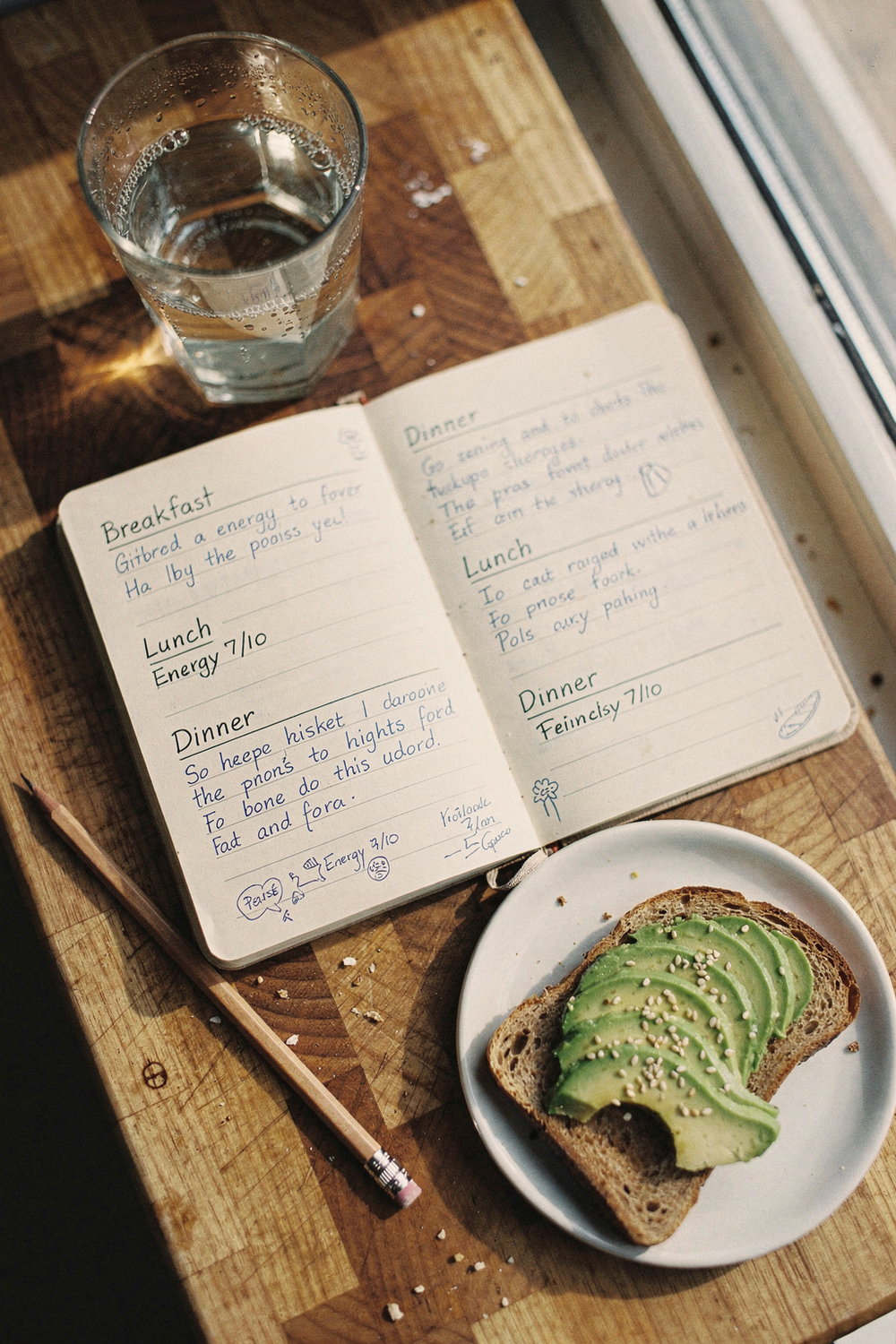
Search "how to eat for more energy" and you'll get a list of foods. Spinach, almonds, sweet potatoes, green tea. The advice is always the same: swap bad foods for good ones and you'll feel better.
It's not wrong. It's just incomplete.
Wellbody's Eat for More Energy goal spans four phases over 12+ months. Across 54 weeks of structured progression, the system surfaces patterns about energy that go far beyond grocery lists. These aren't tips buried in a blog post. They're structural decisions built into how the plan works - visible in the rationale behind every week's design.
Here are five lessons the data reveals that most nutrition advice skips entirely.
1. Tracking energy matters more than counting calories
The very first week of the plan doesn't ask you to eat differently. It asks you to notice. The system's rationale: "Establishing daily habits early on is crucial for long-term adherence and effectiveness." The specific habit? Keeping a food journal that logs what you eat alongside how you feel in terms of energy levels.
That "alongside" is the key detail. Most wellness apps track macros, calories, or food groups. Wellbody's system tracks correlation - the relationship between specific meals and your actual energy response. By Phase 3, this evolves into a "personalized energy tracking journal" where the rationale shifts to: "Energy assessments will help correlate dietary changes with energy levels, providing valuable feedback."
The pattern is consistent: across all four phases, the system treats energy as something you measure directly, not something you calculate from nutritional labels. This matters because two people can eat the same meal and feel completely different afterward. Your body's energy response is personal. A calorie count can't tell you that. A journal that tracks how you actually feel can.
2. Hydration is the energy lever hiding in plain sight
From Phase 1 Week 1: "Ensure proper hydration and nutrition to aid recovery." Phase 2: "Allow time for digestion before engaging in physical activity." Phase 3: "Ensure adequate hydration during fasting." Phase 4: "Take breaks during cooking to avoid fatigue."

Hydration appears in the Recovery dependency of every single week across all four phases. Not occasionally. Every week. The system treats water intake not as a health checkbox but as a load-bearing pillar of energy management. Phase 1 makes it one of only two starting habits - monitoring water intake alongside food journaling.
This mirrors what the research shows: even mild dehydration (1-2% body weight loss in fluid) can reduce concentration, increase fatigue, and lower mood. Most people reach for coffee when they hit a 2 p.m. slump. The data in this plan suggests reaching for water first. It's less exciting advice, which is probably why most nutrition content buries it in a sidebar. Wellbody's system puts it on day one and never lets it go.
3. When you eat reshapes how you feel
Phase 2 introduces a concept most people don't encounter until deep in a nutrition plan: glycemic index awareness. The rationale: "Focusing on foundational skills helps solidify essential habits that support energy levels." But the surprising part comes in Phase 2 Week 3: "Healthy snacks can prevent energy dips and maintain focus during activities."
By Phase 3, the system goes further with meal timing strategies. The rationale reads: "Starting with two complementary low-startup activities helps create a strong foundation for energy optimization." The system isn't just asking what's on your plate - it's asking when the plate appears.
The lesson embedded in the progression: energy dips are often timing problems, not food problems. You can eat perfectly clean and still crash at 3 p.m. if there's a six-hour gap between lunch and dinner with nothing in between. The plan builds this understanding gradually - first through glycemic awareness, then through strategic snacking, then through deliberate meal timing. It treats your energy curve as something you can design, not just something that happens to you.
These five lessons - energy tracking over calorie counting, hydration as a foundation, timing over content, the mood-food loop, and energy as a social project - aren't hidden in the fine print. They're structural decisions baked into how Wellbody builds the Eat for More Energy goal across four phases. The system teaches these principles by designing them into your daily actions, not by lecturing you about them.
4. Your mood and your meals are in a constant feedback loop
Wellbody builds the system for you.
3 daily actions across fitness, nutrition, mobility, recovery, and mindfulness.


Every single week of the plan includes a MentalWellness dependency. Phase 1: "Consider journaling as a reflective practice to enhance mental clarity." Phase 2: "Stay mindful of how food choices affect your mood and energy." Later: "Reflect on the emotional impact of food choices." Phase 3: "Manage stress through mindfulness practices, especially during fasting." Phase 4: "Practice mindfulness around food choices."
The system doesn't treat nutrition and mental state as separate lanes. They're wired together in the plan's architecture - every week asks you to observe the connection between what you eat and how you think and feel. This isn't a wellness add-on. The rationale makes the logic explicit: "Reflect on how new knowledge affects your food choices." Your emotions shape what you eat. What you eat shapes your emotions. The system builds awareness of this loop so you can work with it instead of being controlled by it.

This is one of the clearest gaps between body health systems and conventional nutrition advice. A meal plan tells you what to eat. It doesn't ask how you felt when you ate it, or whether stress drove you to skip the meal entirely, or whether anxiety about food is burning more energy than the food itself provides. The system treats your mental state as a variable in the energy equation because it is one.
5. Energy is a social project, not a solo one
Phase 1 Week 1: "Create a conducive environment for meal preparation." Week 2: "Share findings with friends or family to enhance accountability." Week 3: "Involve family members in meal planning for shared accountability." Phase 2: "Consider dining with others to enhance social aspects of eating." Phase 3: "Create a supportive environment by discussing your goals with friends or family." Phase 4: an entire week dedicated to social eating strategies - learning to navigate restaurants, gatherings, and shared meals without abandoning your plan.
The SocialEnvironmental dependency shows up in every week of every phase. The system's rationale for this consistency: "Engage with supportive communities for accountability." It treats your social environment not as a nice-to-have but as a structural requirement for sustaining energy-focused eating.
This makes sense when you step back. Most eating happens with other people or is influenced by other people. Your coworker suggests takeout. Your partner picks the restaurant. Your family shapes what's in the fridge. A nutrition plan that ignores all of that is a plan that works in theory but breaks down on Tuesday night when someone orders pizza. The system builds social strategy from week one because it knows that your environment shapes your defaults, and your defaults shape your energy.
The takeaway
The most useful things a structured energy plan teaches you have almost nothing to do with which foods to eat. They're about how to observe your body's response. How to use water as a tool. How to design your eating schedule instead of reacting to hunger. How to notice the connection between your mood and your meals. How to build an environment that supports your choices instead of undermining them.
Most nutrition advice gives you a list of ingredients. These lessons give you a system for understanding why you feel the way you feel - and what to do about it.
That's not a diet. That's energy literacy.
About Wellbody
Wellbody is a body health app that replaces the stack. Pick one goal and it builds three daily actions across fitness, nutrition, mobility, recovery and mindfulness, then adjusts them around what you actually did. Connected behind the scenes so you don't have to manage the pieces, and it grows with you: month six looks nothing like month one. No dashboards, no re-planning. You just keep showing up.