Most beginner routines fall apart for a fairly boring reason. They are built around a schedule instead of around movement. You commit to four days a week, you find a plan that looks credible, and by the third week you are either sore in places that worry you or you have quietly stopped going. The schedule was not really the problem. The problem was being asked to repeat movements your body had not learned yet, at a volume it had no reason to tolerate.
A more reliable order is to learn a small set of foundational movements first, then build a week around them. That is the sequence Wellbody uses for mastering foundational movements, and its first phase runs 4 to 8 weeks with bodyweight work and almost no equipment. What follows is the order to build things in, and why each piece comes when it does.
Choose a small set of movements, not a full program
Almost everything you will do in a gym or a living room for the next decade is a version of five patterns: squatting, hinging at the hips, pushing, pulling, and carrying something while staying upright. A beginner routine only needs a bodyweight version of each. The stated aim of the first phase is familiarising the body with basic movements and developing body awareness, which is a different job from getting tired. Body awareness is what lets you notice that your left knee drifts inward, or that your lower back is doing work your hips should be doing.
Keeping the list short is the point, not a compromise. Five movements practised twenty times each is how a pattern becomes automatic. Twenty movements practised five times each is how you stay a beginner for a year. It also makes the routine portable: you can run it in a bedroom, a hotel, or a corner of a gym, which removes most of the excuses that end early routines. And a short list is easy to warm up for, which matters because dynamic warm-ups are listed as a key activity of this phase rather than something to fit in if there is time.

Practise form before you add any resistance
Form work sounds like the boring prerequisite you skip, but it is the actual content of the first phase. Two of its key activities are watching instructional material specifically to learn common mistakes and their corrections, and recording or mirroring yourself so you can see what you are doing rather than guessing. Almost nobody can feel their own hip position accurately at the start. A phone propped against a water bottle solves that for free.
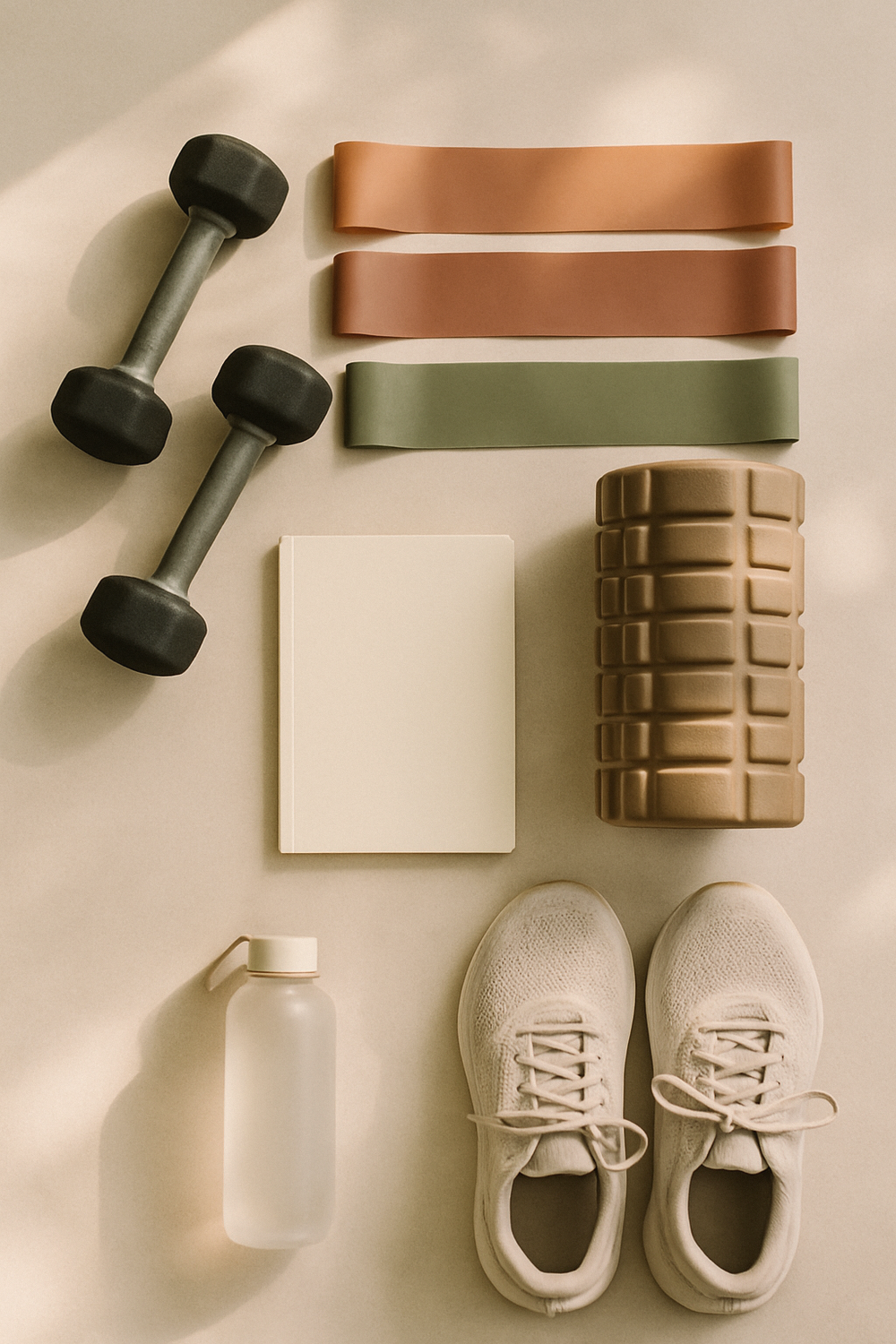
The rule that keeps beginners uninjured is simple: do not add load to a pattern you cannot repeat cleanly when you are tired. Resistance is not skipped forever. It arrives in the second phase, which runs 8 to 12 weeks and introduces resistance bands or light weights alongside stability work for the core, with repetitions and sets increasing gradually. The waiting is what makes that phase safe rather than a setback.
Give the week a shape you can repeat
A first week in Wellbody is themed rather than crammed. The focus is establishing foundational movement practices with attention to form and structure, and the days carry that: the week opens with The Launch, moves through Strength in Practice midweek, and closes out a Finishing Strong session before Rest and Recover and a Reflect and Reset day. Three real sessions, spaced out, with the days between them doing genuine work. That is a full beginner week, and it is less than most people assume. Three sessions is also enough to practise a pattern often enough to learn it, which is the actual objective at this stage, while leaving enough space that you turn up to each one able to move well.
Wellbody builds the system for you.
3 daily actions across fitness, nutrition, mobility, recovery, and mindfulness.


The routine that works is rarely the one with the most sessions. It is the one where every session asks for a movement you can already perform well.

Treat recovery, food and sleep as part of the routine
The non-training days are not gaps in the plan. Wellbody attaches specific dependencies to this goal: a cooldown and stretching after every session, 7 to 8 hours of sleep to support recovery, enough protein to actually rebuild the tissue you worked, and some form of relaxation after training so stress does not accumulate alongside the fatigue. This is why the first week includes days themed around Nourishing the Foundation and Planning for Progress rather than three more workouts. Three small actions a day, spread across movement, food and recovery, is the shape of the routine, not an add-on to it.
What happens once the routine holds
Somewhere in the 4 to 8 week window, the sessions stop requiring a decision. You are not talking yourself into them, and the movements feel like something you own rather than something you are attempting. That is the signal the first phase has done its job. From there the second phase adds resistance and stability work across 8 to 12 weeks, and the third, which runs 3 to 6 months, moves onto compound movements like the squat, deadlift and bench press with mobility work supporting the added range and load.
Read end to end, that is roughly a year to genuine competence, which is longer than any beginner plan advertises. It is also why it works. The movement journal you keep in the first phase becomes the record that tells you when to progress, and reviewing it weekly is a better guide than any fixed timetable. Build the small version properly and the bigger version becomes a matter of adding weight to something you already do well.
About Wellbody
Wellbody is a body health app that replaces the stack. Pick one goal and it builds three daily actions across fitness, nutrition, mobility, recovery and mindfulness, then adjusts them around what you actually did. Connected behind the scenes so you don't have to manage the pieces, and it grows with you: month six looks nothing like month one. No dashboards, no re-planning. You just keep showing up.