
Most mobility apps are, functionally, video players. You press play, someone stretches on screen, you follow along, and ten minutes later you feel looser than you did. That is genuinely useful and it is also why so many people plateau after a month. Feeling looser and becoming more mobile are different outcomes, and only one of them lasts past dinner.
This compares the popular mobility and flexibility apps on the harder question: do they change how your joints move in three months, or do they just make this afternoon more comfortable? Wellbody is one of the apps here, so its section is labelled as such.
What better mobility actually requires
Two halves, and most tools only sell you the first. The first half is range of motion, which is what stretching addresses. Phase 1 of Wellbody's mobility goal, Foundation of Mobility, runs four to eight weeks and covers exactly that ground: daily stretching for the neck, shoulders, back, hips and legs, controlled joint mobility work for shoulders, elbows, wrists, hips, knees and ankles, foam rolling, diaphragmatic breathing and fifteen to thirty minutes of walking a day.
The second half is strength and control at the end of that range, and it is the part almost every mobility app skips. Phase 2, Building Strength and Stability, runs eight to twelve weeks and adds bodyweight strength around the joints, balance work such as single-leg stands, dynamic stretching, and a weekly yoga or pilates practice. If your stiffness keeps coming back every Monday no matter how much you stretch, this is usually why.
Bend
Bend is the simplest and most pleasant option in the category. It has a free tier, routines organised by body area, and sessions short enough that you will actually do them on a bad day. For building a daily stretching habit from nothing, it is hard to beat, and low friction matters more than sophistication in the first month.
The limit is scope. It is stretching, and only stretching. There is no strength work, no balance work, and no walking prompt, which means it covers roughly half of phase 1 and none of phase 2. The routines also stay the same as you improve, so month six looks a lot like month one and your range stops moving with it.
Pliability
Pliability, previously known as ROMWOD, is built around long guided sessions with a calm, deliberate pace and a strong breathing component. If what you want is to be told exactly what to do for the next twenty minutes and not have to think about it, this is the most polished version of that on the market, and the daily-session format builds consistency well.
The trade-offs are time and passivity. Sessions of fifteen to thirty minutes are a real commitment, and the emphasis on held positions means you are working almost entirely on the range side rather than the control side. There is also no assessment, so the routine you get is the routine everyone gets, whether your restriction is in your hips or your shoulders.

GOWOD
GOWOD is the best of these at telling you where you actually are. It opens with a mobility assessment, produces a profile of your restricted areas, and then serves daily routines and before-and-after-training options based on that profile. That is the closest thing in the category to a plan built for your body rather than a generic one.
Wellbody builds the system for you.
3 daily actions across fitness, nutrition, mobility, recovery, and mindfulness.


It is still stretching-first. Strength around the joints, which is what turns a temporary range gain into a permanent one, is barely present. And like the others, it is scoped tightly to mobility, so the dependencies this goal names - seven to eight hours of sleep to aid recovery, a balanced diet, mindfulness for body awareness, and time allowed for muscles to recover after stretching and walking - sit entirely outside the app.
The assessment is still the most useful thing any of these three offer, and it is worth doing even if you go on to use something else. Knowing that your ankles are the restriction rather than your hamstrings changes what you should be spending ten minutes a day on. Most people are stretching the part that feels tight rather than the part that is actually limiting them.
Stiffness that returns every week is usually not a flexibility problem. It is a strength and habit problem wearing a flexibility costume, and stretching harder will not fix it.
What Wellbody does differently
Wellbody is a body health app built on three daily actions tied to one goal, and for mobility those three actions are deliberately spread across domains. The sample first week runs a stretch action and a joint mobility action every single day, paired with an evening breathing action, and dedicates one day to walking. The daily themes move from kickstarting the habit through to a mid-week check-in and a reflection day, which is a different shape from picking a video and hoping.
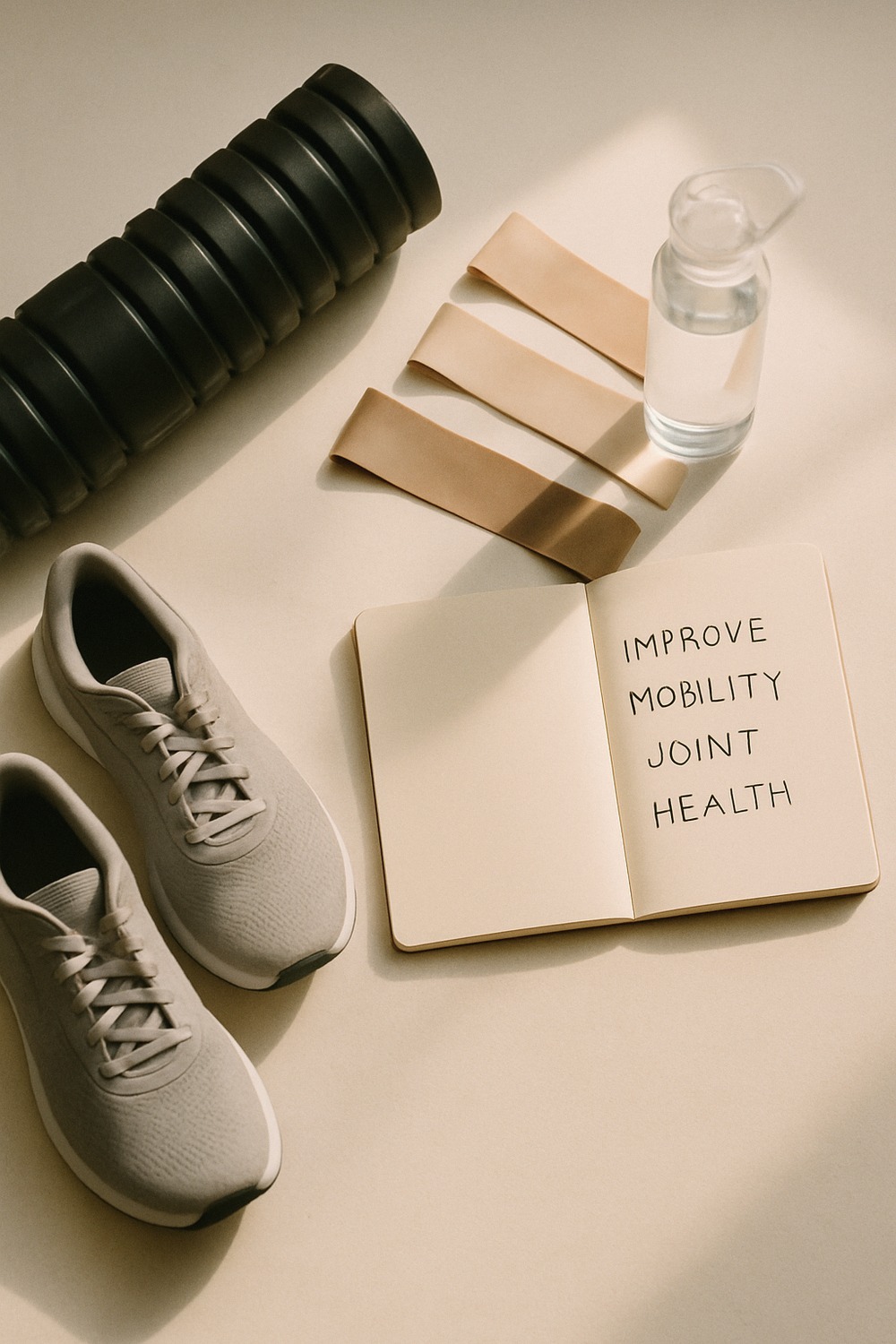
The other difference is that the plan does not stop at stretching. Phase 1 takes four to eight weeks on foundation work. Phase 2 runs eight to twelve weeks on strength, stability and balance around the joints. Phase 3, over three to six months, moves into functional movement patterns and more advanced stretching, and phase 4 builds a routine tailored to what your body still needs. A mat and a foam roller cover the whole of the early phases.
Three things people ask most often before they start working on mobility.
About Wellbody
Wellbody is a body health app that replaces the stack. Pick one goal and it builds three daily actions across fitness, nutrition, mobility, recovery and mindfulness, then adjusts them around what you actually did. Connected behind the scenes so you don't have to manage the pieces, and it grows with you: month six looks nothing like month one. No dashboards, no re-planning. You just keep showing up.